

The current article is a paper project, the initial draft of which dates back to the summer of 2024. In 2025, I submitted it to a certain academic journal, which was unable to review it because of then ongoing changes in their editorial policy and review process. I intended to submit it again there or elsewhere later, but ultimately ended up not to, which is why I can share it here in the end.
The main intent of this text was to provide a sort of follow-up on another paper published in Mechademia: it was, put briefly, to provide a methodological framework for a sakuga-inspired history of anime (or, as I called it in the article, a “social history of art”), this time with a stronger “case study” taste and less theoretical developments. As hinted at in the conclusion, I had in mind a third paper, this time dedicated to the global reception and definition of anime, still inspired by Becker and Suan. This third piece would also have made the transition to my current PhD research, focused on anime fans. However, it has never gotten past a few scattered notes and I doubt it will ever see the light of day.
Since the initial draft, I have made a series of more-or-less important edits to the text, but the core structure and argument are the same as when I started; it makes it a sort of summary or conclusion of my activities in Japan until that point. I should note that, while I was aware at the time that both Yamashita Shingo and Kutsuna Ken’ichi were at work on their respective directorial debuts, I did not know anything specific about either Cosmic Princess Kaguya or Sekiro. However, I do not think that their release or style disproves my argument about their post web-gen carriers and respective auteur stances in any major way. More generally, I think this article is far from perfect and would have benefited from the outside perspective provided by peer-review; my application of Becker’s framework is sometimes oversimplistic, and it doesn’t always fit quite as well as I wished it would. Moreover, I wish I had been able to go further away from the “key animator as auteur” mentality and focus more strongly on collective activity. But I believe the methodological effort to have been worth it, that some part at least of the argument still stands, and am quite happy with some of the analyses. Finally, I think some of the information provided isn’t widely known, if at all, in English, which is one more argument to share this text.
“It felt like my mind would burst”: this is how animator and director China describes his reaction upon reading one of the very few artistic manifestos in Japanese animation history, New Animation [Takase 2024b]. A self-published book (dо̄jinshi) first issued in 2011 by animators Kutsuna Ken’ichi and Yamashita Shingo, it is a retrospective look on their careers by two of the founding members of a major movement of 2000s Japanese animation: “web trend”, “web-generation” or “web-style” (web-kei) animation. As the ambiguity of the Japanese term indicates, the “web-gen”’s borders are hard to delineate: it is alternatively a style, a practice of animation or an animators’ collective. In its most restrictive sense (followed in this paper), the word only applies to three animators: the aforementioned Kutsuna and Yamashita, and Ryo-chimo, covering their activities until roughly 2013 on TV series such as Noein (Satelight 2005, dir. Akane Kazuki) or Birdy the Mighty: Decode (A-1 Pictures 2008-2009, dir. Akane Kazuki). More inclusively, it encompasses a wider, international set of artists and stylistic practices which could be said to persist to this day. In both cases, its origins lie in those of the animators it labels: people who have entered the animation industry without going through conventional training programs provided by schools or studios, but after being scouted for their amateur work published online and their mastery of digital animation technologies.
This polysemy introduces us to the concept mainly elaborated on in this article: that of an aesthetic. This word can indeed be understood in two ways: first, as a set of shared formal characteristics between artists and/or works — then synonymous to style. Second, as a set of critical/theoretical categories binding artists and works together, summarizing a certain view of art — then akin to a more-or-less implicit philosophy of art. Both meanings are complementary: the “aesthetic” discussed here encompasses both the theory and practice of art. This dual meaning is key to this paper’s purpose, which is to integrate stylistic concerns and socio-historical analysis within the fields of animation and more specifically anime studies. The “relationship between art and labor” [Frank 2019, 4] has already been invested thoroughly by Hannah Frank in animation studies, while recent work in anime studies still manifests a relative but decreasing differentiation between work on either “character acting” [Suan 2024] or “graphic style” [Kopylova 2023, 2024] on one hand, or “industrial history” [Denison 2023] and “labor networks” [Hartzheim 2024] on the other. Encouraging a synthesis between such approaches, the present paper uses the concept of aesthetic to understand form as a social object. While Frank’s research takes the single frame or document as the starting point to an understanding of technologies and labor relations within animation industries, this paper first reconstructs the social and historical context of a given animation industry to understand how it informs animators’ work and perspective.
Such an approach might be seen as similar to the one followed in production studies, but the present research follows a different angle which, while acknowledging individual and collective self-representation and using them as central sources, first and foremost endeavors to understand form, its constitution and evolution and does so through an analysis of social practices. It therefore rather follows the methods and concepts elaborated in Howard Becker’s sociology of art. Bypassing tricky questions of what constitutes “art” or “artists”, Becker instead envisions creative production as a form of cooperation organized in “art worlds”, that is, “the network of people whose cooperative activity, organized via their joint knowledge of conventional means of doing things, produces the kind of art works that art world is noted for” [Becker 2008, 24]. The Japanese animation industry is understood here as one of such art worlds, where conventional (industrial or semi-industrial) practices produce a media-form itself characterized by conventionality and cooperation [Suan 2021]. Becker’s framework is suited to support my definition of an aesthetic in at least two ways. First, it considers production as a network involving human actors, technology, ways of thinking and acting and the alternatively cooperative or competitive relationships they share. This will be mobilized to highlight the web-gen’s evolving stances in both sociological and technological terms. Second, Becker’s study questions the nature and possibility of evolution within social worlds, accounting for both change and stability. This serves my own historical intent, which shows how the web-gen’s aesthetic sometimes succeeded and sometimes failed to challenge the status quo of its art world.
As previously mentioned, while Becker’s work is the foundation for the research presented here, it also builds on new developments within anime studies in particular. On one hand, recent work in both English and Japanese focuses on anime’s workers and their presentation in media [Nagata & Matsunaga 2024; Kopylova 2023]: similarly, this article interrogates the animator’s status in the production pipeline and industry members’ view of their place within their own art world. On the other hand, researchers have shed light on sakuga fans, who bear a particular interest for animation styles and the work of individual animators [Tai 2024; Suan 2018]. My own research on the web-gen illustrates that its aesthetic emerged out of sakuga fandom as much as it has become a condition of possibility for its development, thus resituating the latter within the wider context and history of the Japanese animation industry. It therefore interrogates the role of audiences in formulating aesthetic criteria and influencing the inner social histories of creative industries. Moreover, it should be noted that a large part of my research is also akin to sakuga fan practices: watching and analyzing anime for their animation and staff, reading animators’ interviews and memoirs, attending anime-related events, as well as more-or-less formal interactions with members of anime’s art world, some of whom are the protagonists of this article: Kutsuna Ken’ichi, Ryo-Chimo, China or Oguro Yūichirо̄. Rather than field notes resulting from more-or-less direct participant observation, the present work is an effort to synthesize various sources existing in the professional and fan spaces to produce a social history of art [Watzky 2025].
Retracing the social, artistic and intellectual evolution of web-generation animation, this article first introduces the web-gen in more detail and examines its social dynamics, focusing on the networks that made it possible. Then, it moves to the web-gen’s relationship to technology, retracing the emergence of digital animation in anime and its role in a socio-aesthetic shift. This shift is afterward investigated in its critical formulation through close reading of some of the web-gen’s key texts. Finally, I interrogate the web-gen’s legacy, illustrating how its practices spread throughout the Japanese animation industry.
1 – The web-gen as social network
As its name indicates, the web-gen originates from the Internet: its members were scouted thanks to their online activities. Two of them, Kutsuna and Ryo-chimo, had their own blogs (Kutsuna setsubi, created in 2001, and Chimo Nо̄to, created in 2002, none of which are still active today but have been partly archived). Both websites hosted illustrations and animations made by their creators as well as BBS bulletin boards. Kutsuna’s blog and its BBS became an important meeting place for the budding online community of animation fans. Kutsuna held a “sakuga fan-ish diary” on which he commented on anime he watched and speculated about animators’ work. It eventually caught the attention of animation journalist and critic Oguro Yūichirо̄, who had created his own independent media WEB Animestyle in 2000 and started holding talk events with industry members in late 2001. The two other members of the web-gen, Ryo-Chimo and Yamashita, also visited Kutsuna’s website, with Yamashita even claiming that this discovery was one of the reasons leading him, who had no prior experience with drawing nor received any form of artistic education, to aspire to become an animator [Yamashita & Muroi 2015].
It was through Oguro that Kutsuna entered in direct contact with the industry, visited various studios, and ultimately made his professional debut on Fullmetal Alchemist (Hagane no Renkinjutsushi, 2003-2004, Bones). He was immediately put in charge of key animation without any prior professional experience, a rare feat at the time. Ryo-Chimo’s trajectory was similar: through his website, he received illustration offers, then entered a video game company. In 2004, he was introduced by fellow online illustrators to director Kobayashi Osamu, who invited him to participate in the TV series he directed, Beck: Mongolian Chop Squad (2004-2005, Madhouse). Like Kutsuna, Ryo-Chimo was immediately offered key animation work. Kobayashi’s interest in Chimo and other artists active online is easily explained: not only was he an active participant to Animestyle’s events, and therefore a key member of the Japanese sakuga community, his work at studios 4°C and Gonzo, two pioneers of 3DCG, digital 2D animation and compositing in the 2000s, made him quite open to digital-native artists.
While labor networks in the Japanese animation industry have mostly been discussed in relation to studios and specific work environments [Pruvost-Delaspre 2021, Hartzheim 2024], the web-gen’s case, that is a loose collective of freelancers whose 3 members did not exclusively work together, illustrates how other factors can lead to their formation. In fact, the dominance of freelance labor, especially when it comes to animators [Hartzheim 2024, 178], constitutes a fundamental condition of possibility for entry within the industry and the constitution of such informal collectives: even an untrained animator is ultimately just a freelancer among others, and groups centered around stylistic or personal affinities can easily move across studios and productions — thus forming collectives that fall under Becker’s description of patterns of cooperation.
Beck can be considered the web-gen’s real beginning, marking the transition from an essentially online, horizontal network to such a professional collective essentially based on apprenticeship (once again not within a single studio, but contingent on personal affinities and moving across production sites). It was there that Ryo-Chimo met his and the web-gen’s two mentors, Utsunomiya Satoru and Matsumoto Norio. Rather than accuracy to character models, Utsunomiya often used deformation techniques (notably smears or exaggerated squash-and-stretch) and a loose approach to bodies and models. Moreover, his design sense, anatomically accurate but very simple and going against anime’s traditional beautifying style, made him an appropriate mentor for non-professional artists. Similarly, while Matsumoto would stick closer to character models, he blended a sense of realism in terms of weight and volume of bodies with a systematic use of anatomically impossible deformations inserted for the sake of dynamism. Like Utsunomiya, he was a heavy practitioner of so-called limited animation on 3s and “full-keys” animation wherein the key animator works without the services of an in-betweener [Yamashita & Hirakawa 2010]: such a practice would only further encourage the web-gen artists’ individualism, a tendency already rooted in their non-professional background. A respected veteran, Matsumoto worked alongside the web-gen on all of their main works: Noein in 2005 (featuring Ryo-Chimo), the Birdy the Mighty: Decode series in 2008-2009 (Ryo-Chimo, Kutsuna, Yamashita) and the Yozakura Quartet series from 2010 to 2013 (Tatsunoko Productions, dir. Ryo-Chimo; Ryo-Chimo, Yamashita). According to Ryo-Chimo, it was probably through Matsumoto that he gained the trust of Akane Kazuki, director of Noein and Birdy the Mighty: Decode, who provided, for better or worse, a platform of expression to the web-gen [Ryo-Chimo 2023]. Because of the controversy it caused among industry members and audiences, the latter series is often referred to as one of the many “incidents” caused by the web-gen.
The most infamous of them happened on the second season’s seventh episode. Using the action-heavy contents of the episode to its advantage, the animation team simplified everything to the extreme (from coloring schemes to shapes, designs and framerates) in order to produce something all about movement. Led by the animators instead of senior staff members such as episode, animation or series director, it was, to quote Kutsuna, “a terror attack” on the production, causing high-ranking staff to react negatively [Kutsuna & Yamashita 2016, 19]. The latter were validated by the audience, which heavily criticized the episode, especially online. It ultimately led to the most radical scenes being heavily redrawn for the DVD release.
Another similar “incident” (which did not, however, lead to redrawing) happened on episode 167 of Naruto: Shippuden, a climactic fight which incurred heavy criticism as the movement and facial expressions were deemed comical and out of place. A testimony from Wakabayashi Atsushi, director of this specific episode and main victim of the backlash it caused, illustrates how such “terror attacks” could happen and sheds light on the strategies used by the web-gen, which relied on both social connections and a specific kind of technical expertise (investigated in more detail in the next section). Recommended to Wakabayashi by their mentor Matsumoto, Yamashita and Kutsuna overrode anime’s multi-layered supervision process by animating digitally and flooding Wakabayashi with an unprecedented amount of drawings (most of the episode is in full animation), making it impossible for him to make adjustments:
I had never worked on digital before, and even if we printed the drawings, there was too much. I couldn’t handle it all, nor could I foresee what it would turn out like. For someone like me who had only ever worked on paper, it was completely unprecedented, and in the end it got out of my control [Wakabayashi 2025, 107].
Matsumoto’s role as the one who introduced web-gen artists is of particular interest here: thanks to his own status as a respected artist and his friendly relationship with senior staff members, he may have pre-emptively protected and acted as guarantor for the web-gen. His highly integrated position within the art world would then have shielded him from some of the most violent backlash. On the other hand, Kutsuna and Yamashita’s status as freelancers may also have helped them avoid heavy consequences on their careers: had they acquired a bad reputation in a given production or studio, they could always move to some other.
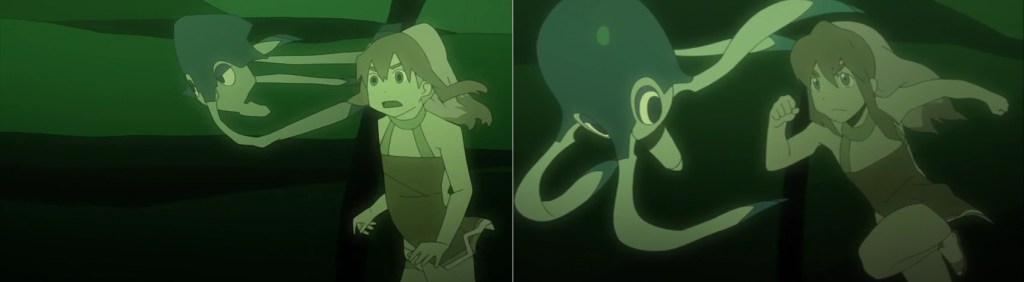
In interviews, Ryo-Chimo reflected on the complex reception of these “incidents”. In one, he states that “people said it was the end for the web-gen, or that we had destroyed the series [Birdy the Mighty]. But it also became a turning point leading me to think that we couldn’t just go wild and had to do things the proper way” [Ryo-Chimo 2011]. In another, he rather says that “‘Web-gen’ was sort of a diss, coined to point out people that got into the anime industry because they were like, ‘famous on the internet’. But I think around the time Birdy came out, it started to grow from a disrespectful expression to a synonym for this rock ‘n’ roll lifestyle […]. There was this sort of value shift, and the web-gen suddenly became cool” [Ryo-Chimo 2023]. These highlight the complexity of legitimization between internal (“we had to do things the proper way”) and external (“the web-gen became cool”) dynamics. Such dynamics can also be observed in another kind of network made up not of mentors but of friends and colleagues who, although they might come from different backgrounds, shared roughly the same age and ambitions.
The most clearly identifiable moment for the formation of such a network around the web-gen is studio Gonzo’s Bokurano in 2005. Yamashita’s professional debut, it also included among its staff Kutsuna, Ryo-Chimo, their mentor Matsumoto and a plethora of animators in their twenties. All testimonies from the group note the strong sense of community. Rather than the mentor figure Matsumoto, its central member seems to have been Kutsuna, who taught how to use animation software Flash to anyone interested — attested are at least Yamashita and Oshiyama Kiyotaka [Yamashita & Muroi 2015; Oshiyama 2024]. Two of the core members of Bokurano’s animation team, Oshiyama and Natsume Shingo, then both in their 20’s, quickly moved to supervisory or directorial positions — perhaps because they were less confrontational in style and attitude than the web-gen artists. Just like veteran Matsumoto had done, they then leveraged their positions to invite the web-gen animators and provide them with occasions to showcase their talents. A good example would be the 2011 film Fullmetal Alchemist: The Sacred Star of Milos (Hagane no Renkinjutsushi Mirosu no Seinaru Boshi, Bones), a steppingstone in 2010s action animation on which Natsume and Oshiyama were respectively unit director and animation director. In an environment of mutual competition and emulation, they would for instance let Kutsuna experiment with fully-animated digital special effects which have become a trademark of his [Kutsuna & Oguro 2023, 101].
Over the course of this section, three kinds of networks have been highlighted. The first was the introductory one, thanks to which web-gen artists entered the anime industry. It is the most unusual, being individualized and horizontal, unlike traditional career paths going through institutions such as schools. The second is based on apprenticeship and can be found throughout the anime industry in more-or-less formalized terms [Pruvost-Delaspre 2021]. What makes the web-gen’s case exceptional is its efficiency as the stature and open-mindedness of the web-gen’s masters provided an environment for the young artists to bypass traditional hierarchies and enabled them to experiment early on even in environments that should have been far more constraining. The same can be said of the third network of same-generation colleagues and comrades who, throughout their careers, would provide opportunities to their acquaintances. While the collaborative dimension of animation production is widely acknowledged, I have shown that the nature of these collaborations is variable: it can be hierarchical or horizontal, conflictual or friendly… As Becker notes, “the artist’s involvement with and dependence on cooperative links […] constrains the kind of art he can produce” [Becker 2008, 26]. In other word social links are not simply a necessary condition to produce animation, their character influences what kind of animation gets made. The web-gen would not have emerged, or at least not the way it did, if the connections pointed out did not exist. But these networks can themselves be mediated or conditioned. For the web-gen, one of such mediators was technology, what Becker calls “equipment” [xxiii]. It profoundly influenced animators’ style and position within the “pattern of cooperation” that is the anime production pipeline.
2 – The web-gen as use of technology
Becker’s sociology ultimately interrogates what enables art to exist the way it does. A major cause of the web-gen’s emergence as such was its members’ affinity with and use of certain animation technologies. But as much as it made their aesthetic possible, it also encouraged resistance to it: as Becker notes, the “equipment” sometimes “embodies the conventions” of an art world, a status quo some may want to protect [57]. A change in equipment implies a change in the art world as a whole, leading to what Becker defines as an “artistic revolution”: “innovations disrupt routine patterns of cooperation […]. People can no longer cooperate with others in the accustomed way, and cannot produce as usual the kind of works they know how to make. Revolutionary innovations, involving deliberate changes in the conventional language of the art, inevitably change who can act together to do what. […] They attack, ideologically and organizationally, the standard activities of that art world at that time” [304-5]. In this section and the next, the web-gen’s status as an artistic revolution — instead of simple “drift” — is interrogated: first in terms of practice, and then in terms of discourse and concepts.
When discussing the web-gen’s use of technology, the first mention should be that of the Internet. The role of blogs and bulletin boards has been touched on: a communication tool which helped level hierarchy between communicants, it bridged the distance between producers and consumers and provided hands-on training in animation practice and criticism to web-gen artists. However, as already briefly noted, the web-gen’s true originality and what enabled it to lead “terror attacks” or an “artistic revolution” was its use of digital animation. By “digital animation” here, I refer to the drawing part (sakuga) of the overall animation production process. Implementation of computers for coloring or compositing had started by the end of the 1990s in the Japanese industry, and was becoming standard by the mid-2000s. Some studios and creators were earlier or bolder, and the web-gen’s early association with Kobayashi Osamu and studio Gonzo, or its frequent references to pioneer of digital animation and compositing Iso Mitsuo are no coincidences. However, the use of tablets and computers to draw was far from standard. To this day, many animators in Japan still draw on paper.
The implications in terms of patterns of cooperation are major. Admitting that the coloring and compositing departments are already fully digitalized, the key animator’s drawings still need to be checked, cleaned-up and in-betweened by separate staff. If even just one of these individuals still works on paper, the entire process cannot fully accommodate digital anymore and someone, somewhere has to adapt. As Becker states, “anyone who can handle the machinery will know how to do the things necessary for coordinated activity” [57]. Aside from the social connections discussed in the first section, digital artists therefore had to choose productions depending on whether they could welcome them or, as Kutsuna and Yamashita did, adopt a hybrid solution by drawing roughs digitally and then cleaning up on paper [Kutsuna & Yamashita 2016, 30].
Technology is correlated to both social integration and style. In nearly every discussion by or related to the web-gen, the implications of digital animation are discussed as follows: thanks to the previsualization function, it allows the animator to immediately see their own animation and therefore to approach it as movement rather than just a series of individual drawings. Ryo-Chimo speaks of an “inversion” of anime’s traditional way of thinking, wherein animators first learn to draw “beautiful/clean (kirei) lines” and only later integrate concepts such as posing or timing [Ryo-Chimo & Kawano 2014, 115]. This inversion, for Yamashita, explains both the web-gen’s specificity and the proximity between its members: previz makes trial-and-error easier, allowing those using it to “avoid usual animation patterns” and create their own [Yamashita & Hirakawa 2010]. At the same time, it leads to a somewhat individualistic approach — acknowledged by Ryo-Chimo as a “risk” in terms of industrial standards of production [Ryo-chimo & Kawano 2014, 116]. A major issue for the web-gen artists was therefore how they would respond to that risk: whether they would discard commercial animation and leave their art world, becoming what Becker calls “mavericks”, lay down their specificity to become fully “integrated professionals”, or try to either reform their art world from the inside or create one of their own.
The web-gen’s answer to this issue was paradoxical. Despite its claims to artistic revolution, it was only moderate in actual practice. While requiring some adaptations in the organization of production, the web-gen’s use of digital did not fundamentally question the patterns of cooperation which make that organization possible. This is visible in Ryo-Chimo’s attempt to implement a fully digital production pipeline within studio Tatsunoko Production on his directorial debut, the 2013 Yozakura Quartet: Hana no Uta TV series. The work of the digital animation team, despite the limited scope of its actual contributions — only key animation was made on Flash and the team just produced 3 episodes — was considered a success by Ryo-Chimo upon the completion of the series [Ryo-chimo & Kawano 2014, 113]. At the same time, another Japanese studio was attempting something similar: Yuasa Masaaki and Eunyoung Choi’s Science Saru. Both teams’ use of Flash, however, were completely different. As was the case in overseas studios from which it took inspiration, Science Saru’s use of Flash capitalized on the software’s vectorization and automatic in-betweening features, which made it possible to produce animation at a limited cost in time, money, and manpower. Such a system necessitated a complete overhaul of the animation process. Considering this and Saru’s quick rise to both domestic and international fame, its use of Flash could be viewed as a bona fide artistic revolution — albeit a failed one as the studio failed to install its production system in the long-term (it did not manage to train a substantial number of in-house Flash animators and almost completely gave up use of the software by the early 2020’s).
Ryo-Chimo and the web-gen, however, essentially simply used Flash as a “virtual sheet”, without fundamentally questioning the structure of the animation pipeline [Cirugeda 2018]. This middle-ground paradoxically led Ryo-Chimo’s attempt to collapse on itself. Indeed, the web-gen’s use of Flash was particularly individualistic, centered as it was on the key animator and not the overall production process. Although Tatsunoko’s program did train new talents, the attempt to generalize the web-gen’s method failed to convince its other members, with Yamashita heavily criticizing it [Yamashita & Muroi 2015] or Kutsuna retrospectively stating that Hana no Uta marked a major generational shift towards the end of the original web-gen [Kutsuna & Oguro 2023, 108]. Aside from each member’s statements, a brief look at their careers attests that the social and technological foundations of the web-gen broke down at that time. Ryo-Chimo quit 2D animation, working on 3DCG productions at studios Polygon Pictures and Tо̄ei Animation; in recent years, having essentially left the TV anime world, he has been mostly experimenting with Blender and VR [Ryo-Chimo 2023]. Similarly, Yamashita took a two-years break from the animation industry, only to return in 2016 as a director and compositor specialized in After Effects, although he occasionally still does key animation work. Kutsuna, who wasn’t involved in Hana no Uta, followed an analogous trajectory, obtaining a position at the Nagoya University of the Arts and then finding employment at a CGI studio, Marza Animation Planet. The attempted revolutionary Ryo-Chimo became a “maverick”, that is a member of the art world who “retain[s] some loose connection with it but no longer participate[s] in its activities directly” [Becker 2008, 233]. Kutsuna and Yamashita’s positions are closer to that of “integrated professionals” as they manage to retain their spirit of experimentation while remaining inserted in the art world — as their accession to directorial duties illustrates.
An uncritical read of the web-gen’s texts and of their defense of digital animation may lead to an understanding of the group and its activities as simple consequences of digital tools in a technologically deterministic line of thought. However, the contextualization provided here, notably the comparison with Science Saru and its own transnational influences, as well as Becker’s insistence on the social nature of “equipment”, invites us to nuance this impression. While certainly new, the web-gen’s use of digital animation was perhaps not as revolutionary as they claimed, nor was it exclusive to them or unique at the scale of the Japanese (not to mention global) animation industry. What distinguishes the web-gen, then, is not just its socio-technological dimension: it is its discursive existence, that is its claim to, rather than practice of, artistic revolution. In the third section of this article, I therefore focus on Kutsuna and Yamashita’s activity not as animators but as critics of their and others’ work.
3 – The web-gen as discourse
Aside from its practice of animation, the web-gen’s specificity lies in the fact that its members formulated an explicit aesthetic discourse of their own in an otherwise highly industrialized environment which, at first glance, would not favor it. This interrogates the web-gen’s members’ vision of their work but also, more fundamentally, of themselves as artists. Or rather, it raises the following question: was the web-gen’s objective to change the animator’s status from worker or craftsman to that of artist? As we will see, the answer is unclear; but that ambiguity itself is telling, as it further illustrates the fact that the web-gen, while it challenged patterns of cooperation on the micro scale, did not do so in terms of labor that would have fundamentally changed the macro structure of the anime industry.
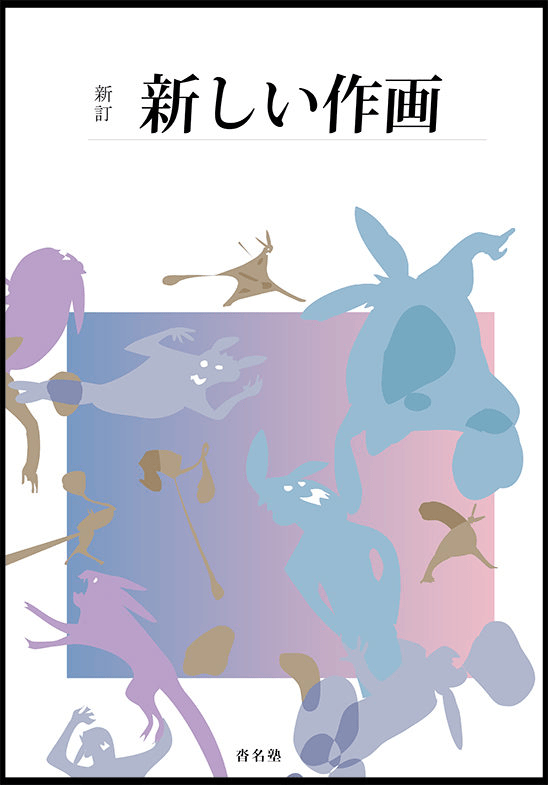
It may not be surprising, then, that the web-gen’s key text — the aforementioned New Animation — followed a particularly traditional format: a collection of animation materials (gengashū) published as a dо̄jinshi at the Comic Market, the biggest event in Japan dedicated to self-published and derivative works, and as such particularly well integrated in the art world of anime’s producers and consumers. But, as repeatedly stated by its authors, it did not follow the unspoken rules of such publications, as it almost entirely includes rough drawings over cleaned-up ones and favors text over images [Kutsuna & Yamashita 2016, 5]: every sequence of drawings is accompanied by a commentary oftentimes including content that would be unpublishable in commercial books, such as derogatory comments or discussion of low salaries and excruciating schedules. Not a decontextualized highlight of its authors’ work, it rather emphasizes self-narrativization: Kutsuna multiplies anecdotes on his career while Yamashita explicitly divides his animation into an “early”, a “middle” and a “current” period. It also bears a strong message, as is made explicit by Yamashita’s foreword, which deserves to be cited at length:
It might be a purely personal conviction, but the reason the definition of ‘web-gen’ has expanded so much is that myself, Kutsuna and Ryo-Chimo, that is the animators called ‘web-gen’, probably shared many similar aspirations.
These applied to structuralism, efficiency, engineering, pragmatism, resistance against society and reform.
That the three of us shared the same tendency may not be coincidental: it might have been the kind of character that our time called for.
I believe this to be the reason that led the term to expand as it did: the animation of the generation who lived through these times became just like the web-gen’s even without any linear sequence of events or direct contact.
What is it, then, that so many young people sharing the same aspirations long for?
In short, it is to bring down the techniques previous generations have come up with and taught us and, with fewer effort and of course more refinement, make our aspirations come true as a new form of animation. Is this not quite different from the path previous generations of animators have trodden?” [1]
Everything one may expect to find in an artistic manifesto is present in this text: defining a group and its objective, its position within its art world, and some of its ideological tenets. These are remarkably left quite vague, and terms such as “structuralism, efficiency, engineering” etc. are never defined either in this foreword or throughout the book. They rather appear to be keywords, either with certain coded connotations or there to provide intellectual varnish. In any case, the overall message is that of the web-gen as avant-garde: the emphasis is on youth and a break with the past in political, ideological and methodological terms. These connotations persist all over the book, with references to twentieth-century European avant-gardes such as Dadaism or Surrealism [19, 39].
Who exactly Yamashita means by “previous generations” is made clearer in other texts, and New Animation’s main goal is not to provide the “alternative history of the medium” Becker discusses in relation to manifestoes [Becker 2008, 305]: it is not turned towards the past, but the future. There is however a clear intent to break with the dominant Japanese understanding of the animator as craftsman (shokunin), that is an individual spending their entire career polishing a specific skilli. The most scathing critique comes from Kutsuna: “I often encounter people with amazingly rich experience at drawing and animating, who are however unable to draw anything captivating. Such people must think that, since animators are craftsmen, it’s absolutely normal to just perfect their technique (gijutsu) but this is completely missing what meanings ‘technique’ encompasses” [Kutsuna & Yamashita 2016, 24]. One might expect Kutsuna or Yamashita to provide an explicit counter-model, that of the artist against the craftsman; but such a figure remains implicit. Indeed, words directly relating to art or artists (sakka, geijutsuka, ātisuto, geijutsu, bijutsu, bigaku…) are almost non-existent, except for a sentence by Kutsuna which borrows an English word: “doing animation is, in itself, an artistic (ātisutikku) form of expression” [63]. Despite the foreword’s lofty tone, then, it is not through concepts but through example that New Animation develops its aesthetic discourse.
It is then at the purely individual level that New Animation offers an alternative way of practicing animation, centered around three core principles: economy, experimentation, and overturning established categories of quality. The first is already expressed in the foreword: “with fewer efforts […] make our aspirations come true”. Kutsuna goes so far as to say that “the work of mine I like the most is the one that took the least time and effort” [26]. More succinctly, Yamashita describes his animation in the following words: “natural, without complications, efficient” (nachyuraru, nayamazu, kо̄ritsu-teki) [48].
This acknowledgement of the difficulty of animation labor and the desire to bypass it have three consequences. The first is a tendency to animate by instinct, to improvise — as is visible in Kutsuna’s anecdote that a sequence he animated an hour before his deadline turned out better than it would have had he spent more time and effort on it [13]. The second is a focus on rough but powerful animation over clean, consistent drawings, the former being more efficient in the sense that it is easier to produce and believed to be more expressive. The third consequence of the principle of economy leads into New Animation’s second main theme, that of experimentation: it is to find new methods of animating that make things more efficient. Among them are, naturally, digital animation, but also the systematic use of reference, often picked up online, or rotoscoping. As seen in Kutsuna’s critique of the animator-as-craftsman, it emphasizes the individual animator’s creativity in their research for unique reference and the way they use it — not just copying but recreating. While going against usual industry practices, this insistence on experimentation is also a way to avoid the pitfalls of the economy principle. The first would be to go back to anime’s traditional cost and time-saving measures, precisely what the web-gen protests against, and the second would be the accusation of laziness or irresponsibility coming from fellow industry members.
Such criticism is directly addressed in the final theme of New Animation: to counter traditional ways of assessing animation. In that regard, one of Kutsuna’s central comments is a reflection on the term sakuga hо̄kai, “animation collapse”, referring to sequences or episodes thought to be badly drawn or animated — a comment often leveraged at the web-gen’s work due to its not following character models. The text begins as provocatively as possible: “I like watching animation collapses” [28]. There are two reasons for it: the first is that the animation stands out most when it is “bad”: it breaks the viewer’s focus on the plot to remind them that they are watching animation, that is “something artificial”. The second is that, in the best cases — the ones sought by the web-gen — an animation collapse represents the animator’s rebellion against the directorial intent and, more widely, expectations of what animation should be. While not always as direct, many other comments develop this idea, with Kutsuna repeatedly expressing frustration at animation that is “conventionnally good” (futsū ni umai) [19].
Another form of resistance against established perceptions of quality relates to the timing and framerate of animation. While touched on in New Animation, this argument is mostly developed by Yamashita in a 2010 talk with director Hirakawa Tetsuo, in which he provides a genealogy of the web-gen’s aesthetic [Yamashita & Hirakawa 2010]. The discussion starts with a description of the web-gen’s approach to movement, called “timeline style” (taimurain-kei) — that is, viewing animation as a continuous movement (just like the timeline of animation programs such as Flash) instead of a series of still images. This entails, in Yamashita’s words, a specific “perception of time”. For the web-gen, this perception was enabled using digital, but also existed in animators working on paper: namely, the web-gen’s mentors Matsumoto and Utsunomiya. Yamashita systematically compares them to other animators whose work acts as alternatives or counter-models. The main target of Yamashita’s criticism is Inoue Toshiyuki, whose animation is described as predictable and overly analytical. The very criticism of Inoue is indicative of the web-gen’s contrarian position: already one of the most famous animators in Japan at the time, Inoue is one of the leading figures of realist (riaru-kei) animation thanks to his work on films such as Akira, Ghost in the Shell or Jin-Roh. Moreover, by the end of the 1990s, he emerged as a leading animation critic and historian from within the industry thanks to, among other things, the animation history lessons he held at studio Production I.G., summaries of which were available online. The critique of his practice and vision of animation is, in other words, a critique of the then-dominant aesthetic among anime creators and audiences: as Yamashita states, “what I’d like to tell sakuga fans is that Inoue’s animation is not all there is”. Among the criticisms leveraged is one on timing: Inoue, a well-known admirer of classical US animation, tends to favor animation on 2s, that is so-called full animation. On the other hand, Yamashita, the web-gen and the artists he cites as inspiration defend the use of animation on 3s, closer to limited animation. He goes so far as to claim that Kutsuna and him would like to make an anime entirely on 3s and that “animation on 3s is the most realistic”. This take itself situates the web-gen in the lineage of animator and director Iso Mitsuo, who, through the concept of “full 3s” (furu san-koma) defended the idea that, if used well, animation on 3s appears more natural and realistic that animation on 1s, generally thought to be the absolute guarantee of quality and realism [Iso 2024].
A close examination of the web-gen’s discourse highlights the movement’s originality and its limits: essentially centered on formal issues, it individualizes the animator and does not consider issues of labor or organization beyond the accommodation of digital animation. While New Animation’s nature as a manifesto implies that it was at least partly aimed at fellow industry members, the contextualization of the web-gen within anime and sakuga communities illustrates that the web-gen’s main challenge was to create itself an audience, which would share its definition of animation quality. As such, it showcases that the limits of the art world go beyond the practitioners of the art. As mentioned, audiences’ reaction to the web-gen’s work was far from positive. In other words, for the web-gen to be accepted and establish its position within its art world, its discourse had to reach a wider number of people and had to be welcomed. Such a process of legitimization both inside and outside the industry proper is the object of the following section.
4 – The web-gen as model
Legitimization can mean either one of two things: the institutionalization of web-gen artists as they moved from peripheral or oppositional positions within the art world to that of integrated professionals; or the approval and spread of the web-gen’s aesthetic, that is its practice and philosophy of animation. It is these processes which retrospectively confirm the web-gen’s relevance: as relative as its practice of artistic revolution was, it did spark followers and imitators and had effects over anime’s identity — that is both its material existence and understandings of it. This is demonstrated through a renewed examination of career trajectories as well as formal analysis which, in the continuity of Stevie Suan’s work, will focus on the interrelation between form and performance — here, of aesthetic and social identities.
The web-gen’s institutionalization was an ambiguous phenomenon, as it originated in its members’ initial position as individual animators but became possible because they moved away from it and embraced some of the organizations they had rebelled against. Such a transition is actually evoked by Kutsuna in a 2016 addition to New Animation, in which he discusses the opposition between “animation” (sakuga) and “works” as whole (sakuhin) and his desire to move from the first to the second — which entails that he has stopped longing after “new animation” that goes against the overall consistency of his works [Kutsuna & Yamashita 2016, 71]. While this reflects Kutsuna’s transition from animator to director and his embracing anime’s traditional patterns of cooperation that went alongside his greater integration within them, the main activity that led to institutionalization was teaching. For instance, Ryo-Chimo has since 2012 served as an instructor in the government-funded Animation Bootcamp training program. On the other hand, both Yamashita and Kutsuna have since 2011 co-organized the “Kutsuna lessons” at, among other places, the Japanese Animation Creators Association. Both organizations hold a certain degree of legitimacy and are fully integrated in the Japanese animation industry’s art world.
But the web-gen artists also took some distance from it: such is the case of Kutsuna’s aforementioned time at the Nagoya University of the Arts. It unquestionably opened both his artistic and social prospects, as can be seen from his collaborations with independent animators such as Yо̄kо̄ Yūki on the opening of Mahо̄ Shо̄jo Magical Destroyers (Bibury Animation Studios, 2023, dir. Ikehata Hiroshi) or his crowdfunded music video Adabana, entirely rotoscoped and produced in collaboration with independent or amateur artists scouted on the Net as well as painter and animator Harata Atsushi. Such an association with more legitimate and more conventionally “artistic” circles enabled him to pursue the web-gen’s aspirations in different conditions and come back to the industry as an openly auteurist director. Works made in such a context therefore display a different kind of relationship towards anime-esque tropes than Kutsuna’s web-gen-era works. The latter, defined as “new animation”, were oppositional and essentially sought to renew or rewrite anime’s aesthetic. The former, on the other hand, are premised on homages, citations and an interrogation over what constitutes anime aesthetics. While different from the usual fare of TV anime in stylistic terms, they do exhibit anime-esque tendencies of citation and repetition [Suan 2021].
While Yamashita seems less interested in such interrogations, he defends a similarly auteurist view, professing a proximity with Neon Genesis Evangelion director and quintessential auteur Anno Hideaki who “prioritizes the director’s vision” over the animation [Inoue 2024, 120]. This stance goes beyond more-or-less provocative and performative statements and can be seen in both Yamashita and Kutsuna’s tendencies as directors. For instance, both make repeated use of visual motifs (water and goldfishes for Kutsuna, plants and natural imagery for Yamashita) and regularly explore the same formal options (flat images and compositing reminiscent of analog animation for Kutsuna, lighting effects and three-dimensional volume for Yamashita). In the opening sequences and music videos they have directed, they have also rooted their styles in certain softwares and technical tendencies: Photoshop for Kutsuna and After Effects and Blender for Yamashita, who has earned himself the reputation of an expert in the simultaneous use of 2D and 3D animation.
On the other hand, the degree of inspiration the web-gen represents for other animators can be roughly measured by looking at formal and social developments in the anime industry since the mid-2010s. Focusing on animation, one of the most important has to have been the generalization of artists being scouted before going through any training or obtaining any professional experience, just like the web-gen. While the factors for this situation are complex and do not limit themselves to those that led to the emergence of the web-gen, the results have been similar, although wider-ranging: the emergence of multiple groups of extremely young animators, often in their 20s or under, who have entered the industry without traditional training. China, whose words open this paper, is such an individual: he did his first animation at 16 and went professional two years later, after quitting university. He has, among other things, participated in an episode often compared to the web-gen’s work on Birdy the Mighty: Decode: 2017’s Fate/Apocrypha #22 on which many other young artists, with or without a professional background, have participated and produced extremely dynamic, pioneering action animation [Takase et al. 2024]. On top of their youth, multiple staff members are notable for their non-Japanese origin: such is the case of its Taiwanese director and animation director Go Hakuyu, Korean animators Moaang and Myoun or Austrian animator Bahi JD.
While Japanese animation has always relied on the contributions of foreign staff [Yamamoto 2014], the accelerating implementation of digital workflows and the normalization of non-academic backgrounds has encouraged foreign artists to work on anime without necessarily residing in Japan and enabled them to access increasingly senior positions. This has accelerated the development of horizontal relationships of which the web-gen is a prime example. Web-gen members themselves have encouraged the development of such networks through frequent collaborations with this new generation of artists: Moaang is a regular collaborator of Yamashita’s, while Kutsuna has worked multiple times with, among others, young Filipino animator Vercreek. To describe this state of affairs, China has embraced the word “post web-gen” [Kutsuna & Oguro 2023, 106], which can be understood in two ways: it only exists thanks to the web-gen, and can only be understood in relation to it [Kutsuna, Oguro, China 2023]. Alternatively, English-speaking fans have coined the term “gai-gen”, a combination of the Japanese words gaikokujin (foreigner) and genga (key animation) — or alternatively the English “generation” — which insists on the transnational nature of animation production while semantically being reminiscent of the web-gen.
While it may be hard at first glance to ascertain what relationship post web-gen artists have to their predecessors aside from occasional professional contacts, certain works do appear to interrogate it. This is notably the case of the opening sequence for Heavenly Delusion (Tengoku Daimakyо̄, Production I.G., 2023, dir. H. Mori), directed by American artist Weilin Zhang and featuring a team of young artists, many of which are not from Japan. Zhang’s multiple simultaneous positions on this opening (direction, storyboarding, animation direction, key animation, in-betweens and compositing) attests to his ability to control multiple stages of production and his mastery of various specialized softwares in a now largely digitalized environment, characteristics shared with Kutsuna and Yamashita’s recent work and post web-gen practices in general. The possibility to oversee production at different levels, which has been made considerably easier by digital technologies, unsurprisingly plays into the web-gen and post web-gen’s construction of auteur figures who are able to individually control every aspect of their works. Moreover, it can be understood as a form of institutionalization and softening of the web-gen’s early “terror attacks”: while similarly challenging established production hierarchies, the individualization of animation production does not fundamentally undermine the production structure which remains respected on paper.
Aside from the fact that Yamashita animated on this opening, it seems largely inspired by his style in its atmospheric representation of light or frequent use of color tracing (characters being drawn without outlines, in flat spreads of color), a technique often employed by the web-gen. A shot of computer processors turning into a tree growing in fast-forward even appears like a direct citation of one of Yamashita’s main motifs. To borrow from Stevie Suan’s terminology, this opening goes beyond simple homages and provides a performance of the web-gen: the existence of the post web-gen thus extends the web-gen’s attempt to break with the anime-esque in favor of “new animation” while at the same time confirming its place within the anime-esque by citing and repeating it. What makes the Heavenly Delusion opening particularly interesting, however, is that it does not stop there: in line with the series’ reflection on personal identity, it displays its own technological conditions of possibility in an almost perfect case study in media archeology. Indeed, it constantly juxtaposes images of analog and digital technologies (such as a shot showing the two main characters of the series on a CRT screen in a style reminiscent of retro JRPGs or another of computer processors) as well as visual styles reminiscent of analog animation (notably in the backgrounds) against others which are quintessentially digital (as visible in the lighting effects and the use of color tracing). In other words, not just a performance of the web-gen, this opening questions its own technological and formal origins and whether it can find a place in anime’s conventional aesthetics. Its hybrid style then appears as an attempt to overcome the opposition between analog and digital and offer a new definition of anime.
As their legitimization through access to institutional and hierarchical positions showcases, at least some of the web-gen members have become fully integrated professionals in the Japanese animation industry. This has entailed a shift in the scope of their attempted artistic revolution: not in terms of pure animation anymore but in terms of productions led by auteurs. While similarly individualistic, this shift entails a different relationship towards the organization of labor and the art world as a whole. The emergence of the post web-gen on discursive, social and formal levels attests to the relative success of the original web-gen at the scale of anime’s art world: while the web-gen’s style and practices have not become the norm in the Japanese animation industry, they have brought about followers and imitators. In fact, it might be possible to argue that the social dynamics that made the web-gen possible have been repeated for the post web-gen: the function BBS boards once played is now fulfilled by social media, particularly X, while Kutsuna and Yamashita have provided more-or-less direct mentorship to younger animators just like the one they once received. Moreover, the very existence of the label “post web-gen” seems to point towards horizontal and generational relationships similar to that of the web-gen itself.
At its core, this article sets out to explain how and why change happens. Taking the group of Japanese animators known as web-gen as a case study, it showcases the possibilities of sociological analysis to grasp not only dynamics within production sites, but also technological, formal and discursive changes in creative industries. Admittedly, the framework offered here may not be particularly new at the level of cultural studies, studies of art or even animation industries [cf. Pruvost-Delaspre 2021]; however, I hope to have shown how relevant it may also be to the study of subgroups within cultural industries and how efficient it can be to bridge the gap between various domains often taken separately.
While Becker’s concept of art worlds has served to reconceptualize the inner workings of the Japanese animation industry, my redefinition of an aesthetic grounds the practices and participants of the art world within a particular formal and discursive context. Both notions have mainly been leveraged to understand animation production but, as hinted many times, they also suggest a continuity between the former and the field of reception. It is in fact what Becker points to in Art Worlds:
We need studies which tell us how, in specific art worlds, assessments of styles, genres, innovations, artists, and particular works are circulated. Who tries things first? Who listens to and acts on their opinions? Why are their opinions respected? Concretely, how does the word spread from those who see something new that it is worth noticing? Why does anyone believe them?” [Becker 2008, 55].
This directs us towards a “sociology of artistic quality” [Leveratto 2000], that is research on who experiences art in what ways, and how audiences and institutions formulate concurring criteria of what constitutes art or non-art, good art and bad art. For instance, research on the sakuga community could focus on its historical and sociological processes of emergence, the way it defined a canon and norms of “good” animation and the feedback loop it established with the animation industry regarding such standards, thus becoming an essential actor of anime’s art world. On the opposite end of the spectrum, a closer study of the negative, sometimes violent reactions the web-gen’s experimentations provoked and the debates over “animation collapses” would allow us to obtain a more nuanced and complex view of animation fandoms and the way media audiences in general are defined by their “dislikes” as much as their “likes” [Gray 2021]. In sum, while I have tried to provide a synthesis between production-focused and form-focused approaches, it is also possible to extend this effort and build a continuity between production and audience studies.
Acknowledgements
The present research would have been impossible without the help of people working within, or adjacent to, the Japanese animation industry. Aside from those already cited in the article, all my thanks go to Takahashi Jun’ichi for the many introductions and advice.
Special thanks also go to Mathieu Mallard for the valuable advice and proofreading.
Works cited
Becker, Howard S. Art Worlds, 25th Anniversary Edition. University of California Press, 2008.
Cirugeda, Kevin. “The Advent Of Digital 2D Animation In The Anime Industry: 10 Years Since Birdy The Mighty Decode.” Sakugablog, 31 July 2018, https://blog.sakugabooru.com/2018/07/31/the-advent-of-digital-2d-animation-in-the-anime-industry-10-years-since-birdy-the-mighty-decode/.
—. “Systemic Lack Of Training, “Convenient” Technological Advances, And The Destruction Of Technique & Knowledge In The Anime Industry.” Sakugablog, 30 September 2023, https://blog.sakugabooru.com/2023/09/30/systemic-lack-of-training-convenient-technological-advances-and-the-destruction-of-technique-knowledge-in-the-anime-industry/.
Denison, Rayna. Studio Ghibli: An Industrial History. Palgrave Macmillan, 2023.
Gray, Jonathan. Dislike-Minded. Media, Audiences and the Dynamics of Taste. New York University Press, 2021.
Hartzheim, Bryan. “Genre Networks and Anime Studios.” The Cambridge Companion to Manga and Anime, edited by Jaqueline Berndt, Cambridge University Press, 2024, pp. 172–85.
Heller, Sabine. “Below-the-Line Creativity and Authorship in Animation : The Reality of Animation Production” Revue Française Des Sciences de l’Information et de La Communication, vol. 18, 2019, https://journals.openedition.org/rfsic/8071.
Inoue, Toshiyuki. 井上俊之の作画遊蕩 [Inoue Toshiyuki’s Pleasure of Animation]. Kadokawa, 2024.
Iso, Mitsuo. アニメーターインタビュー磯光雄2000 [Animator Interview – Iso Mitsuo 2000]. Animestyle, 2024.
Kopylova, Olga. “Drawing Works Together: Anime Media Mix and Graphic Style as a Shared Cultural Resource.” Mechademia: Second Arc, vol. 16, no. 1, 2023, pp. 190–211.
—. “Graphic Style in Anime and Manga.” The Cambridge Companion to Manga and Anime, edited by Jaqueline Berndt, Cambridge University Press, 2024, pp. 59–69.
Kutsuna, Ken’ichi, Oguro Yuichiro, China 第208回アニメスタイルイベント 沓名健一の作画語り 2023年夏 [“Animestyle Event N°208 – Kutsuna Ken’ichi’s Animation Talk, Summer 2023”]. Animestyle, Loft Plus One, 27 Aug. 2023.
—. 作画マニアが語るアニメ作画史2000-2019 [The History of Anime Sakuga 2000-2019 Told by a Sakuga Buff]. STYLE, 2023.
Kutsuna, Ken’ichi, and Shingo Yamashita. 新しい作画 -新訂 [New Animation – Newly Revised Edition]. 沓名塾 [Kutsuna Juku], 2016.
Leveratto, Jean-Marc. The Measure of Art, A Sociology of Artistic Quality [La Mesure de l’Art, Sociologie de La Qualité Artistique]. La Dispute, 2000.
Makkari, Yūji. アニメ監督りょーちも今なお続くフラッシュへの誤解に困惑「ちゃんと動いてるのをクライアントに理解させるのが難しい」[“Animation director Ryo-Chimo in trouble because of misunderstandings over Flash: ‘it’s hard to make the client understand that it’s properly moving’”]. Otapol, 18 Nov. 2015, https://web.archive.org/web/20151121223654/http://otapol.jp/2015/11/post-4674.html.
Nagata, Daisuke, and Shintarō Matsunaga. “A New Labor Model for a New Era of Anime: A Case Study of Anime Production in the 1970s and 1980s.” Mechademia Second Arc, translated by Kendall Heitzman and Bryan Hikari Hartzheim, vol. 16, no. 2, 2024, pp. 51–72.
Oshiyama, Kiyotaka. “J’ai dessiné la moitié des plans de Look Back” [“I Drew Half of Look Back’s Animation”]. 17 Sept. 2024, https://animeland.fr/2024/09/17/entretien-kiyotaka-oshiyama-jai-anime-la-moitie-des-plans-de-look-back/.
Pruvost-Delaspre, Marie. The Origins of Japanese Animation: Studio Toei Doga, 1958-1972 [Aux Sources de l’Animation Japonaise : Le Studio Toei Doga, 1958-1972]. Presses Universitaires de Rennes, coll. PUR Cinéma, 2021.
Ryo-chimo, Tetsuro Kawano. りょーちもが挑むデジタル作画とその可能性 [“The possibilities of digital animation, as challenged by Ryo-chimo”]. Animestyle, no. 005, 15 May 2014, p. 106-117.
Ryo-chimo. “The Origins and Legacy of the Webgen, Anime’s Rock’n’roll”. 15 Dec. 2023, https://fullfrontal.moe/webgen-ryo-timo/.
—. アニメ監督りょーちも、フラッシュでデジタル作画ワークを構築中「デジタルだけでやれたら距離の問題が解決」[“Anime director Ryo-Chimo, currently creating animation on Flash: ‘If everyone was on digital, the problem of distance would be solved’”]. November 11, 2011,’https://web.archive.org/web/20151203083915/http://otapol.jp/2015/11/post-4724_2.html
Suan, Stevie. Anime’s Identity: Performativity and Form Beyond Japan. University of Minnesota Press, 2021.
—. “Character Acting in Anime.” The Cambridge Companion to Manga and Anime, edited by Jaqueline Berndt, Cambridge University Press, 2024, pp. 146–69.
—. “Consuming Production : Anime’s Layers of Transnationality and Dispersal of Agency as Seen in Shirobako and Sakuga-Fan Practices.” Arts, July 2018.
Tai, Alex. “Animation Platforms: Yoshiyama Yū, Tropical Rouge! Pretty Cure, and Sakuga as New Media.” Mechademia: Second Arc, vol. 16, no. 2, 2024, pp. 121–41.
Takase, Koji, Yamamoto, Ken, China. 新時代の作画――美術・撮影・3DCG [“A New Age of Animation, Background Art and Compositing”]. Anime Fantasista Japan, 12 Aug. 2024, Kichijoji Excel Hotel.
— et al. 『井上俊之の作画遊蕩』刊行記念イベント in 阿佐ヶ谷ロフトA [“Inoue Toshiyuki’s Pleasure of Animation Publication Commemorative Event in Asagaya Loft A”]. 26 May 2024, Asagaya Loft A .
Wakabayashi, Atsushi. “Meeting with Atsushi Wakabayashi” [“Rencontre Avec Atsushi Wakabayashi.”] Animeland, no. 249, 2025, pp. 92–103.
Watzky, Matteo. “Writing Anime History: A Dialogue on Aim for the Top! Gunbuster.” Mechademia, vol. 17 no. 2, 2025, p. 193-211. Project MUSE, https://muse.jhu.edu/article/960867.
Yamamoto, Kenta. The Agglomeration of the Animation Industry in East Asia. Springer, 2014.
Yamashita, Shingo, and Tetsuo Hirakawa. 作画の時間、演出の時間、絶望の時間 [“The time of animation, the time of direction, the time of despair”]. 16 Oct. 2010, https://web.archive.org/web/20131108055341/http://bokuen.net/interviews/yahi.html.
Yamashita, Shingo, and Yasuo Muroi. 僕らのアニメ業界総括 [“Record of our activities in the anime industry”]. 28 Mar. 2015, https://youtu.be/xezFVUAU1JI?feature=shared.


“an animation collapse represents the animator’s rebellion against the directorial intent” is a really key quote for me and I’m glad you brought a concrete example of it forward, as this is a kind of sentiment that you see repeated often in a vague kind of way. I think something important about webkei is that it isn’t just an advocation of auteurism for the work of the animator, but defines an animator’s authorship as being in conflict with a greater, more conventional author, director being the one directly stated in the quote, but even more pertinent today is the mangaka.
In the 2000s webkei could comfortably complain about being in conflict with the director’s authorship, but how strong is the auteur identity of directors today? Or more concretely, when considering the classically understood auteurs of anime directors as outlined by anime magazines (tomino, miyazaki, oshii) how many modern day directors are in a position to make original works, where they can claim authorship uncontested by a mangaka? Akane at least has directly stated that his intentions with noein were to push against the tides of the time, and express something tomino-like [oguro], and to say that Akane, or Tomino-like auteurs still hold power puts webkei in a position to win by default.
In the 80s there was a real dialogue about the conflict between Takahashi and Oshii’s authorship, or Monkey Punch and Miyazaki’s authorship. Now though, there is absolutely no popular argument among audiences as to whether an animator should be considered a legitimate author in conflict with the mangaka. The mangaka just always wins. You look at the reaction to Nakayama’s handling of chainsawman, and I can’t personally speak to how correct of an evaluation it was, but that’s a huge loss on the side of the animators turned directors who were influenced by webkei. I think there’s a real argument to be made that individual animators, though able to survive professional falling outs more easily as freelancers as you accurately judged, still hold less authority and creative agency as directors than even the previous generation of directors they sought to rebel against.
To me webkei’s prominence strikes me as a bit pious, if not a greater encroachment of commerce’s influence over the medium. Though I’ll freely admit my perspective is limited and I may be being too rash and judgemental. Sorry if I’m being too incoherent lol.
With that said, overall, great work.
LikeLike
Thanks for the detailed comment, as always!
You’re formulating things in a really clear and thought-provoking way and I’m very glad to read it.
For instance, regarding Naruto vs Pain, I’m not sure the criticism against it was every mainly that it’s not “accurate to the manga”, which it would definitely be nowadays. Given that this aspiration to absolute accuracy seems to be shared both in Japan and overseas, I’d be curious to know more about where it comes from.
Regarding traditional “director-auteurs”, your comment raises two thoughts.
The first is Kutsuna himself who, with Sekiro, seems to have taken the risk of a relatively freer adaptation, at least graphically — and from what I’ve seen online, it seems to work. So maybe he made the right transition the right way.
On the other hand, I’m thinking of another classical “auteur” of the last 15 years, Yamada Naoko. Her work at Science Saru has been half adaptations, and it’s striking how she’s building a thematic and stylistic universe merely because of her choice of works to adapt (Tale of the Heike and Jaadugar, which share a lot of similarities besides the historical approaches), different from that of her originals (with the original film Kimi no Iro largely building on her Kyoto Animation-era work).
Not sure that quite answers, but thanks for the food for thought!
LikeLiked by 1 person
Likewise, thanks for the reply!
Yeah you could go in a lot of directions as to why audiences demand fidelity to the original work so much these days. Kyoani and ufotable come to mind as contributors of examples of faithful adaptations that fans refer back to often, but you can’t lay the blame there so easily.
Though comparing Yamada to previous directors, the amount of opportunities and level of commercial success possible is less than it was in the first two anime booms or even in the mid 00s. Akane spent a decade of his career not only directing originals, but not even so much as working on adaptations once, in terms of fidelity to the original work, I have to say that Kobayashi would be crucified for beck’s tonal changes today, and Yamada’s original works have made roughly one eighth of the revenue that her adaptations have. I do still think she’s likely the most interesting director working today along with shinbou, but the direction that she seems to be being shunted into is discouraging.
I can’t speak to sekiro, I’ve seen it considered a bit divisive but you may have a point there.
LikeLike
Interestingly enough, while most Naruto v. Pain complaints did go against the animation, there were plenty of fans complaining about lack of fidelity to the manga (that I encountered across English speaking internet forums, at least). The old forum I got this from has restricted viewing to logged-in members now, but I grabbed a screen shot of one of the posters making complaints about manga fidelity.
LikeLike
Ah, interesting! Next is checking out Japanese forums!
Thanks a lot for sharing!
LikeLike
Nice to have you back! This article was a great read. While the web-gen animators may not have revolutionized the overall production system of anime, I think they did succeed two major ways. One is the general adoption of drawing digitally, which has more to do with the passage of time than anything else. The other is how both the industry and the general anime audience have embraced a movement-over-detail approach to animation in high-profile projects that is not afraid to go off-model and express animators’ individuality. Jujutsu Kaisen seasons 2 and 3 both come to mind as well as One Piece’s most recent arcs. Chainsaw Man season 1 vs the Reze movie is another example or the simple but expressive character designs of Bocchi the Rock.
Now while this trend has lead to a lot of great scenes and impressive playgrounds for talented animators, personally I do miss the realist school approach of Inoue’s that we don’t get to see much anymore. I prefer it when animation has both high detail and good movement, projects like Violet Evergarden. Though I know that is difficult to achieve on anime’s tight schedules, not to mention that the young animators of today are more familiar with the timeline-style of the web-gen than that of the Inoue’s or Okiura’s.
LikeLike
Thanks for the comment!
I agree in the sense that the web-gen has redefined a lot of what “action sakuga” is understood to be.
However, in terms of realism, I’m actually pretty optimistic. In the last few years (decade?), we’ve seen what I’d call a sort of “new” realist school around people like, for instance, Keisuke Kobayashi, Myoun, Moaang… Their work best shines in Cloverworks series like My Dress-Up Darling, but they’ve also been active in action series like JJK too.
That’s why people like China are so interesting: they tend to blend the two vocabularies, and realist TV animation has nothing to be ashamed of when compared to that of the 90s.
Actually, I’ve wanted to write about that more in-depth, but I still find it too challenging to provide something satisfying. One day, maybe!
LikeLike