Artist spotlight: Kazuhiro Ochi
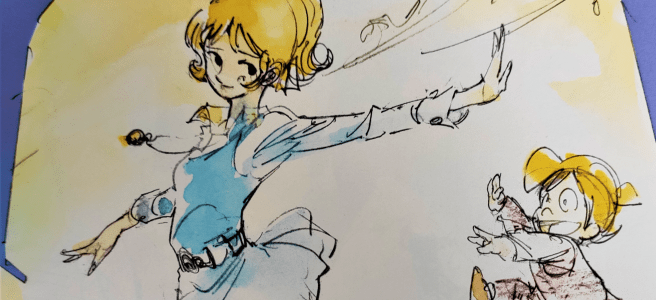
I decided to start this series on the development of the Kanada school with Urusei Yatsura, arguably the moment when its members really became prominent and their style began to spread. But that doesn’t mean it was the starting point where everything began. On the contrary, a complete history of the Kanada school would start before that, in 1977, when Kanada created his Studio Z2. The problem is, many shows that Z2 and then Z3 worked on at the time have become quite obscure and forgotten except for hardcore super robot fans, making them hard to find; there’re also many minor animators whose names haven’t really been remembered. To exemplify these, I’ll focus on the early career of just one figure from that early period: Kazuhiro Ochi.

Their collective masterpiece: Urusei Yatsura

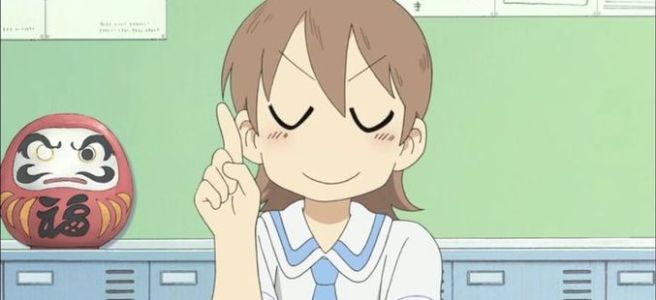
How did Yoshinori Kanada go from being “merely” a very talented animator to one of the most influential members of the anime industry? That’s a fascinating question, and yet one I haven’t seen much precise discussion of. The world of anime was much smaller then, but it was nevertheless a relatively fast process: in just a few years, the budding Kanada school had already its leaders, its main animators, and a flagship named Urusei Yatsura. This is a fascinating show, as it was such an important moment in anime history and saw some of the industry’s most talented creators meet. It started airing in 1981, the very start of the decade for which it would set most of the stage.

Kanada between 1973 and 1974

One of the most difficult periods to retrace in Kanada’s career is his early days. His first credit dates from late 1970, as an in-betweener on the Tôei series Mahô no Mako-chan. He then did in-betweening and maybe key animation until his first credited key animation on Akado Suzunosuke #41 and #48 in late 1972 (the episodes aired in early 1973). Kanada had already joined Studio Z, and it’s around then that the chronology gets blurry.

The Kanada style in context

It is tempting, as is always the case with great artists, to imagine Yoshinori Kanada as a solitary shooting star who appeared and revolutionized Japanese animation from nowhere, a pure genius whose inscription in a historical context is almost irrelevant to understanding his work. The very nature of this project goes against such a vision, as it aims for two things: 1) not just evoking Kanada, but all those he met and inspired, and their own careers, and 2) a history that takes into account not just the artists, but the evolution of their styles and their relationships with the general context of the animation industry at the time.

Exploring sakuga – Conclusion : A sakuga starter pack

As a conclusion for this series on the sakuga community, it seemed fitting to me to target a different audience - not the experienced sakuga fans who would be interested in the theory and history of the community, but those who’ve just started getting into it, or haven’t even yet. Basically, this isn’t going to be an essay like the others, but I’d like it to be used as a resource : a place to find other places to start getting into sakuga.

Exploring sakuga – Part 4 : What is sakuga good for, anyways ?

The idea here is not so much to add on complaints about the current state of the community, whether they’re justified or not. It isn’t either to be a normative account of what sakuga should be - I’ve been an active member of this community for far too little time to even dream of making such claims. Take it rather as my own follow-up on “At Least It’s An Ethos” - though I hope a less controversial one : some ideas about what sakuga means to me as an anime fan, and what it does and could bring to anime writing and criticism in general.

Exploring sakuga – Part 3 : The sakuga debate

By 2016 and the creation of the companion Sakuga Blog, the sakuga community we now know had pretty much been formed. But that wasn’t without debates and heated discussions which would definitely establish the core elements of the sakuga discourse and positioning towards the general anime fandom. This all happened in and around one of the most prominent sakuga blogs of the time, Wave Motion Cannon, between 2016 and 2017.