Their collective masterpiece: Urusei Yatsura

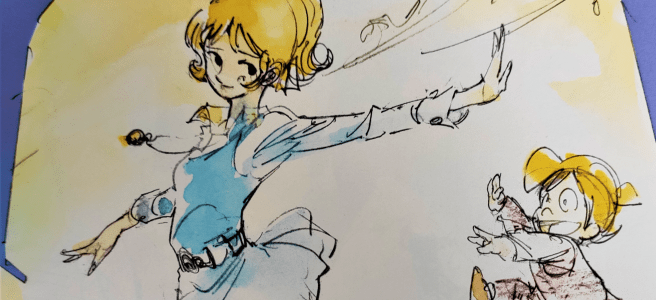
How did Yoshinori Kanada go from being “merely” a very talented animator to one of the most influential members of the anime industry? That’s a fascinating question, and yet one I haven’t seen much precise discussion of. The world of anime was much smaller then, but it was nevertheless a relatively fast process: in just a few years, the budding Kanada school had already its leaders, its main animators, and a flagship named Urusei Yatsura. This is a fascinating show, as it was such an important moment in anime history and saw some of the industry’s most talented creators meet. It started airing in 1981, the very start of the decade for which it would set most of the stage.

The Kanada style in context

It is tempting, as is always the case with great artists, to imagine Yoshinori Kanada as a solitary shooting star who appeared and revolutionized Japanese animation from nowhere, a pure genius whose inscription in a historical context is almost irrelevant to understanding his work. The very nature of this project goes against such a vision, as it aims for two things: 1) not just evoking Kanada, but all those he met and inspired, and their own careers, and 2) a history that takes into account not just the artists, but the evolution of their styles and their relationships with the general context of the animation industry at the time.

My favorite things

Animétudes celebrates its first anniversary! It has been a relatively short time, but the blog has grown a lot and I’m very thankful for that. So, first of all, I thank all my readers and those who have followed me during this adventure. I have done a bit of reflection over the past and future of the blog here. This time, to celebrate, I’d like to come back over my own relationship with animation and sakuga by highlighting some of my favorite animated sequences.

Exploring sakuga – Part 1 : Birth of otaku, birth of sakuga

If you ask different people what “sakuga” is or means, chances are you’ll get different answers ; but all these answers will probably revolve around a few similar ideas : sakuga is good animation ; animation that stands out ; animation made by some talented animators, etc. All these definitions rely on remarkably vague terms (“good”, “standing out”, “talented”), but they all point out a certain awareness that there’s something going on. Animation is not just the things you see moving on the screen, or even the way they move. So to speak, animation is the way things are made to move, in specific ways and by specific people, enough to make it remarkable.