The History of Tatsunoko – 5 – Maturities
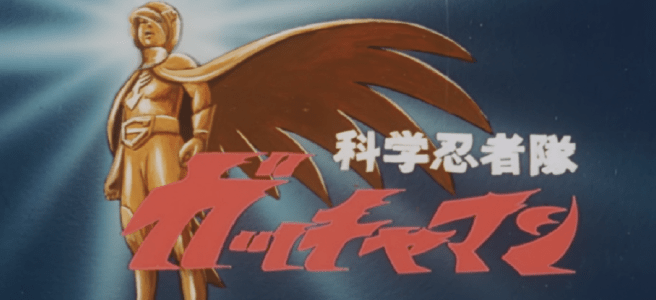
If one single work were to sum up Tatsunoko’s entire production, it would probably be Science Ninja Team Gatchaman. By far the studio’s most iconic series, it was already one of its most popular when it came out. It started airing in 1972, 10 years after the creation of the studio, and 5 years before the death of its creator and leader, Tatsuo Yoshida. Due to this special position, Gatchaman easily stands as an exceptional high point in Tatsunoko’s early history. Moreover, because of its length (105 episodes!) and the changes that occurred within Tatsunoko during its production, it symbolizes the end of an era for the studio: it is, in a sense, the last work from its “early years”. Indeed, it would be so hard to replicate Gatchaman’s success that most of Tatsunoko’s following works are more-or-less simple copies or parodies of it. It would not be until Yoshida’s death and the production of a new Gatchaman series, in 1978, that the studio would find again the creativity and originality of its first years.

The History of Tatsunoko – 4 – Difficult times

hern stands out among studio Tatsunoko’s productions for its unusually dark worldbuilding and dramatic intensity. It was also perhaps one of the studio’s most difficult productions - a direct result of the difficult context it was made in. In earlier articles, I highlighted Tatsunoko’s position in regards to industry-wide aesthetical shifts, such as gekiga anime or mecha animation. This time, it’s time to focus on changes in business practices, staff policy, merchandising and politics - all things that were triggered by one of the most important crises faced by the anime industry throughout its history.

The History of Tatsunoko – 3 – Mecha animations

mixture of expressionist motion and anatomical realism was born. It was also the moment when another one of anime’s key stylistic features developed: mechanical animation. Early TV anime had featured mechanical objects such as spaceships, planes, cars and robots, but it was only by the end of the 60s that “mecha animation” started being acknowledged as a distinct artistic process with its own specific techniques, modes of expression, and expertise different from both character and effects animation.

The History of Tatsunoko – 2 – Experimental anime

The “realist” aesthetic and approach of the show was possible thanks to its director, who in fact debuted as chief director: the second of the three Yoshida brothers, Ippei Kuri. Largely overshadowed by the other two rising anime directors of the time that were Isao Takahata (in Tôei) and Osamu Dezaki (in Mushi), Kuri was easily on par with them in terms of artistic vision; one may even argue that him and Tatsunoko’s artists and technicians largely laid the ground that would make Dezaki’s expressionist style possible. In that regard, Sanshirô can be read as a site for formal and technical experimentation, wherein “realism” was but one of the many aspects that were explored.

The History of Tatsunoko – 1 – Early Days

anese animation studios whose origins go back directly to the so-called “first anime boom” - that is, the development of TV animation. For that reason, Tatsunoko’s first years are chronologically distant and the stuff of some legend: after all, wasn’t the studio one of the pioneers? Didn’t they contribute to forever change the way animation would be made, first in Japan and then in the entire world?

Rascal the Raccoon

The World Masterpiece Theater entry for the year 1976, Marco, pushed studio Nippon Animation and the artists associated with it to their limits. As a result, the year 1977 was marked by disorganization, as most of Marco’s staff temporarily or definitively left the WMT, and the series for that year, Rascal the Raccoon, brought on new, possibly inexperienced, and simply less notable artists. This article will therefore not only focus on Rascal, but on two other works: the first is another Nippon show, Jacky the Bearcub, which counted among its staff most of Marco’s main artists: directors Isao Takahata and Seiji Okuda, and animators Toshiyasu Okada, Kôichi Murata, Reiko Okuyama and Yôichi Kotabe. The other is a completely different production, the first film by studio Shin-Ei, Tenguri, Boy of the Plains, which reunited Yasuo Otsuka and his students outside of Nippon Animation. Just a year before Future Boy Conan, 1977’s Rascal and Tenguri were the last works on which Hayao Miyazaki made significant contributions as a key animator. They therefore represent a turning point in his career, as well as that of all other artists who had been revolving around World Masterpiece Theater productions.

The animation of Char’s Counterattack

When asked what was the biggest anime event of the year 1988, most people would surely answer Akira. Ghibli fans may note Grave of the Fireflies or My Neighbour Totoro. Only few people would mention one of the most ambitious entries in the Gundam franchise: Char’s Counterattack. Yoshiyuki Tomino’s third feature film project, and the first non-recap one, put an end to a story that had been going on for almost 10 years, the so-called “early Universal Century”. It was a turning point, not just for the Gundam series, but for anime as a whole - though this is rarely known or framed as such, since the movie is mostly only accessible to already experienced Gundam watchers. The goal of this article is to correct this state of affairs.

Ghibli outside Ghibli, 1986-1991

While the idea of a unified “Ghibli aesthetic” or “style” is debatable at best, it makes no doubt that all the animators mentioned here brought something different to their work outside the studio. The first element was quality, a result both of their talent and of the formation they had received before or after they started collaborating with Ghibli. The second element is more difficult to grasp, and is closer to what one may refer to as a “style”: something in common to almost all of their approaches to animation. The goal of this article is not only to point out its characteristics and evolution, but also to situate it within a wider context: indeed, the period between 1986 and 1991 is a key one in anime history, as it saw the emergence of a new school of thought and style: realism. Although quantitatively minor, the work of those 6 Ghibli-related animators in fact played a central role in the spread of the realist aesthetic.

From the Apennines to the Andes

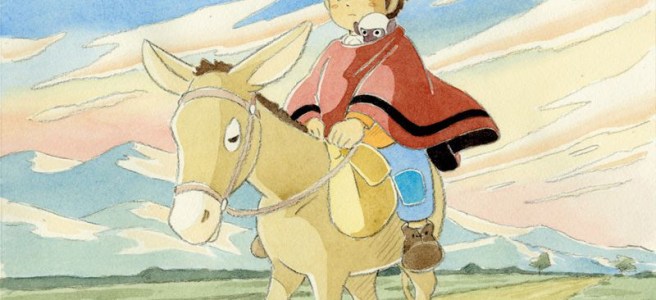
oxical reception and reputation. In Japan, it is just as well considered as Isao Takahata’s other two entries in the World Masterpiece Theater, with entire generations of animators (chief among them Takashi Nakamura, Satoru Utsunomiya and Toshiyuki Inoue) counting it as one of their sacred texts. In English-language discourse, while Marco is extremely well-considered among those who have seen it, their number is small, and Marco is far from being as popular as Heidi or Anne. This article will not aim to provide reasons for this state of affairs, but to give a thorough presentation and commentary on Marco and its importance in Isao Takahata’s career, the World Masterpiece Theater, and anime history at large.

A Dog of Flanders

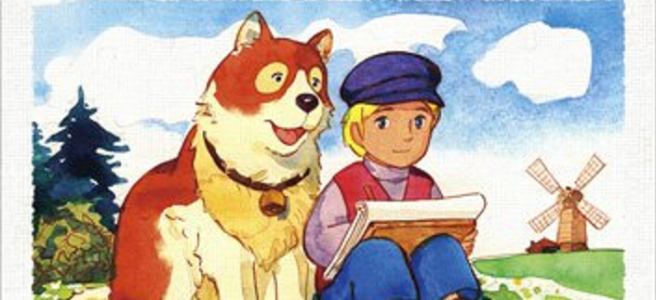
Flanders is among the most well-known works in the World Masterpiece Theater canon, both in Japan and overseas; it is perhaps the most famous outside of the select list of Isao Takahata’s entries in the series. Such fame is not surprising when one considers Flanders’ tragic finale, and the fact that this ultimate episode reportedly reached the highest audience rating in the history of the World Masterpiece Theater - an impressive 30.1%. However, it is also questionable whether such fame is really deserved - indeed, Flanders is perhaps the most imperfect show among 1970’s World Masterpiece Theater entries. There is of course a sort of contradiction here - how is it that such a poorly made series became so popular? The aim of this article is precisely to answer this - to illustrate the elements that make Flanders a subpar work, and to understand how it could have been such a success nevertheless.